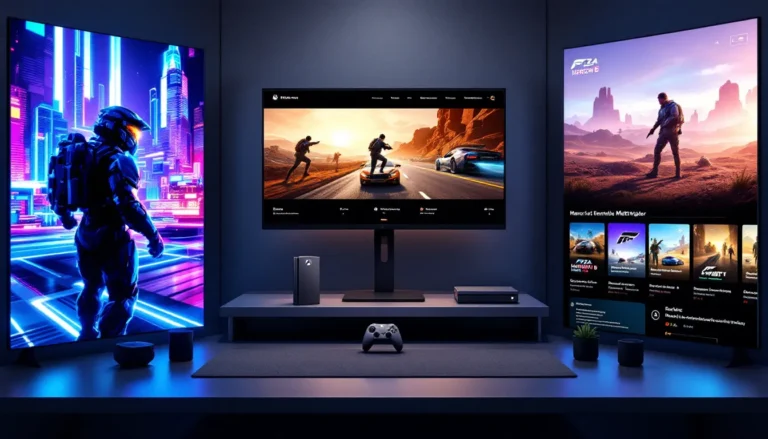



Forza has been dominating the racing game landscape since the original Xbox era, and it’s easy to see why. Over two decades, the franchise has spawned everything from hardcore simulation titles to arcade-style open-world adventures, each carving out its own space in gaming culture. Whether you’re a sim-racing purist demanding pixel-perfect turn-ins or a casual player who just wants to tear through a digital Mexico in a hypercar, there’s a Forza game with your name on it. This guide breaks down every mainline Forza title and spin-off, so you can figure out which one actually deserves your time and storage space in 2026.
Key Takeaways
- Forza games split into two distinct series: Motorsport for realistic simulation racing with authentic physics and tire degradation, and Horizon for open-world exploration and casual fun.
- Forza Motorsport (2023) offers free-to-play competitive racing with a complete physics overhaul, 800+ vehicles, and ranked multiplayer that rewards skill-based progression.
- Forza Horizon 5 delivers the franchise’s most visually stunning experience with Mexico’s meticulously scanned landscape, 500+ cars, and gameplay that prioritizes accessibility and creative expression over strict competition.
- The 20+ year Forza franchise evolution demonstrates that players don’t need to choose between sim-racing depth and arcade enjoyment—the right Forza game exists for every playstyle.
- All mainline Forza titles are accessible through Game Pass on Xbox and PC, making it practical to experience multiple games without additional costs.
The Evolution Of Forza: From Console Launch To Gaming Phenomenon
Forza didn’t invent sim racing, but it made sim racing accessible. When the original Forza Motorsport dropped on Xbox in 2005, it proved that consoles could handle genuine racing simulation without the $30,000 rig setup. That single release planted a flag that Microsoft’s racing franchise would eventually dominate the genre for decades.
The brilliance of Forza’s evolution is how it split into two ideologies: Motorsport for the simulator crowd and Horizon for everyone else. Both series iterated relentlessly, adding features, refining physics, and expanding car rosters. By the time Forza Motorsport (2023) arrived with its full free-to-play structure and Forza Horizon 5 hit Mexico’s streets, the franchise had become a two-headed beast, each game solving different problems for different racers.
Throughout the 2010s and 2020s, Forza maintained a stranglehold on console racing. Gran Turismo had its moments, but Forza’s accessibility mixed with genuine depth kept it ahead. The franchise proved you don’t need to choose between casual fun and competitive intensity, you just need the right entry point.
Forza Motorsport Series: The Core Racing Simulation
The Forza Motorsport series is where the simulation engine lives. These games prioritize accuracy: realistic physics, true-to-life track layouts, authentic car behavior, and genuine competitive racing. If you’ve ever wondered what a GT3 car actually feels like on the limit, Motorsport series delivers that experience better than almost any other console racer.
Forza Motorsport (2023): The Latest Generation
Forza Motorsport (2023) represents the franchise’s biggest reinvention in years. Launching as free-to-play on Xbox Series X
|
S and PC (through Game Pass), it ditched numbered sequels and went all-in on a live-service model. The physics engine got a complete overhaul, tire degradation, fuel management, and weather systems feel more grounded than ever. Wet-weather racing actually matters now: you’re not just driving on wet asphalt, you’re managing hydroplaning and aquaplaning realistically.
The car roster shipped with over 800 vehicles, and new content drops regularly. The track list covers legendary circuits: Laguna Seca, Spa-Francorchamps, Suzuka, and Mount Panorama among them. Career mode structures progression intelligently, starting you with entry-level cars before graduating to serious iron. Competitive multiplayer is tight, with ranked seasons and livery customization that lets you make your car genuinely yours.
What separates FM 2023 from previous entries is accessibility bundled with depth. Assists are granular enough that you can dial in exactly how much help you want. Play it arcade-style with stability control and full racing line, or strip it down to pure simulation. The game respects both approaches.
Classic Forza Motorsport Games: 1-7 Legacy
The numbered Motorsport games (1 through 7) form the core legacy of the franchise. Forza Motorsport 1 and 2 on Xbox/Xbox 360 established the blueprint: detailed car physics, meticulous track recreation, and a focus on genuine racing simulation. FM3 and FM4 expanded the concept with better graphics and deeper career modes.
Forza Motorsport 5 (2013) on Xbox One kicked things up with the Drivatar system, AI that learned from your driving patterns and competed against your friends’ digital ghosts. Visually, it was a generational leap. Forza Motorsport 6 arrived in 2015 with weather effects and night racing, making tracks feel alive in ways previous entries couldn’t match. Forza Motorsport 7 (2017) capped the numbered era with 700+ cars and the most diverse track selection yet.
These older titles still hold up mechanically, though FM 2023’s physics refinements make them feel slightly dated. If you’ve got Game Pass, you’ve got access to several, jumping back to FM7 or FM4 reveals how much the series has learned. They’re worth experiencing, particularly if you want to appreciate the journey.
Forza Horizon Franchise: Open-World Racing Dominance
Horizon is where Forza becomes theater. These games traded circuit precision for festival vibes, turning racing into a festival experience set across massive open worlds. You’re not grinding lap times on Silverstone: you’re rallying across Colorado, launching off cliffs in Australia, or cruising through Scottish highlands. Horizon made racing fun for people who don’t consider themselves sim racers.
Forza Horizon 5: Mexico’s Street Racing At Its Peak
Forza Horizon 5 (2021) remains the franchise’s visual high-water mark. Playground Games scanned Mexico’s landscape meticulously, and it shows, the result is the most beautiful racing game ever made. Deserts with canyon runs. Jungles with foliage that actually impacts visibility. Cities where neon reflects off wet streets after rain. This isn’t just Mexico as a setting: it’s Mexico as a character.
Gameplay-wise, FH5 leaned into accessibility while maintaining surprising depth. The event types span everything from traditional circuit racing to street racing, off-road truck challenges, and airplane races (yes, you race Aeroplanes). Perks and skill trees let you customize your driving experience, and the game never punishes creative play, paint your car pink, build a wild tuning setup, or roleplay as a street racer. It works.
The car roster is expansive, over 500 vehicles at launch with consistent additions. Seasonal events mean there’s always something new. Multiplayer scaled from casual cruising to competitive ranked seasons. The only criticism that stuck was repetition, once you’ve run enough events, the loop becomes obvious. But if you’re chasing pure driving enjoyment mixed with exploration, FH5 dominates.
It’s [available on Xbox Series X
|
S, PC, and Cloud](https://windowscentral.com) gaming through Game Pass, meaning accessibility isn’t theoretical, it’s actual.
Forza Horizon 4, 3, 2, And 1: Building The Open-World Foundation
Forza Horizon 4 (2018) set the seasonal model that made the series iconic. Every week, seasons changed, spring, summer, autumn, winter, and each season fundamentally altered track conditions, what events were available, and how you’d drive. A muddy winter rally played completely different from a sunny summer road race. That seasonal rotation kept the 60+ hours of content feeling fresh.
FH4’s setting was Britain, rendered with gorgeous attention to detail. Roads through the Cotswolds, Edinburgh at night, ancient tracks hidden in farmland. The car roster hit 450+ vehicles, and the community created unbelievable custom races and blueprints. Multiplayer felt less polished than FH5, but the core experience resonated, so much so that FH4 remained relevant for years post-launch.
Forza Horizon 3 (2016) was the franchise’s breakthrough moment. Set in Australia, it proved Horizon wasn’t a one-hit wonder. Diverse environments, excellent progression, and a roster that let you drive everything from hypercars to vintage Holdens. It’s where the series figured out the perfect balance between simulation and arcade, and many still consider FH3 the peak.
Forza Horizon 2 (2014) and Horizon 1 (2012) laid the groundwork. Horizon 1 took traditional Forza racing and dropped it into Colorado, proving the open-world concept could work. Horizon 2 expanded to Europe and refined the formula. They feel dated now compared to FH4 and FH5, but historically they’re where this entire phenomenon started. According to VGC, Forza Horizon 2’s launch was a pivotal moment in redefining what open-world racing could achieve.
Spin-Off Titles And Mobile Experiences
Not every Forza game aims for the living room. Microsoft experimented with mobile racing, arcade adaptations, and experimental takes on what Forza could be. Some landed, others didn’t, but all reveal something about the franchise’s flexibility.
Forza Street: Racing For Casual Gamers
Forza Street (2019) aimed at absolute accessibility. It launched on iOS and Windows 10, positioning itself as casual racing for people who found even Forza Horizon too demanding. Swipe controls replaced analog sticks, events took minutes instead of hours, and progression favored collection over mastery.
The concept made sense: bring Forza’s visual polish and car roster to people commuting on phones. The execution was functional but uninspired. Energy systems gated playtime, the racing itself felt too automated, and there wasn’t enough skill expression to satisfy serious players. Casual players often found better options elsewhere. Forza Street existed, served a purpose, then quietly faded. It’s still playable if you want a zero-friction Forza experience, but it’s not essential.
Forza Racing Evoluzione And Other Mobile Editions
Beyond Street, Microsoft dabbled with other mobile entries. Forza Racing Evoluzione launched on China’s QQ Speed platform and other mobile services, bringing Forza’s licensing and design sensibility to markets where PC and console gaming isn’t dominant. These versions typically included Forza’s famous car roster but adapted gameplay for touch controls and shorter play sessions.
Their impact outside specific regions was minimal. Most racing enthusiasts with phones gravitated toward Pure Xbox’s recommendations for console alternatives or dedicated racing sims. But the existence of these titles shows Microsoft understood that Forza had franchise power beyond traditional platforms. They weren’t masterpieces, but they proved the IP could stretch further than expected.
Which Forza Game Should You Play In 2026?
Here’s the pragmatic question: what should you actually install right now?
Best For Competitive Racing: Forza Motorsport
If you’re chasing tight, skill-based racing with authentic physics and meaningful progression, Forza Motorsport (2023) is non-negotiable. Its free-to-play structure removes entry barriers, and Game Pass availability means most players already have access. The physics feel evolved, tire degradation actually matters, weather affects grip in realistic ways, and the car-to-car interactions feel weighty.
Ranked multiplayer is where FM 2023 shines. Matchmaking pairs you with similarly skilled drivers, and seasons reward consistent performance. The skill ceiling is high, tiny inputs matter, setup tuning affects performance measurably, and mental fortitude under pressure separates good drivers from great ones. If racing is serious business for you, this is it.
One caveat: it’s a live-service game, which means seasonal rotations, evolving metas, and feature updates that sometimes introduce balance quirks. You’re not just buying a complete game: you’re joining an evolving ecosystem. That works great if you enjoy ongoing seasons and competitive ladders. It works less well if you want a static, single-player experience. Forza Motorsport respects that dynamic, but acknowledge it going in.
Best For Casual Fun: Forza Horizon 5
Want to cruise, explore, customize, and feel like a legend without caring about apex speeds? Forza Horizon 5 is unmatched. Its 500+ car roster means you can drive the car you love. Mexico’s open world is genuine exploration, canyons invite speed runs, jungles hide secrets, festivals dot the landscape with events that actually feel festive.
The vibe is accessibility without pretension. You can tune your car to insane levels or just drive stock and still feel fast. Multiplayer ranges from cooperative cruises to competitive racing, so you pick the intensity. Seasonal rotations keep content fresh, and the cosmetic shop lets you personalize your driver and vehicle genuinely.
Graphically, FH5 is still the best-looking racing game on consoles. Wet roads reflect neon and headlights, trees sway realistically, and the lighting changes throughout the day and across seasons. That visual fidelity enhances the experience, speed feels more thrilling when everything around you is rendered beautifully.
The downside: single-player content eventually feels repetitive. The core loop, events, rewards, new cars, repeat, works for hundreds of hours, but eventually you’ll exhaust the novelty. That’s fine for most players: by then you’ve gotten your money’s worth. But if you’re hoping for a 1,000-hour grind with deep progression systems, Horizon 5 won’t keep surprising you forever.
Conclusion
Forza’s 20+ year journey proves a franchise can evolve without losing identity. Whether you want simulation-level authenticity or pure arcade thrills, there’s a Forza game engineered for exactly that. Forza Motorsport (2023) delivers competitive racing for players who want skill-based progression and meaningful car control, while Forza Horizon 5 remains unbeaten for exploration and casual enjoyment.
The beauty of Game Pass is that trying multiple entries costs nothing but time. Jump into FM 2023’s ranked multiplayer, then launch FH5 when you want relaxation. Experience FH4’s Britain or revisit FH3’s Australia if you’re feeling nostalgic. The franchise has enough variety that your next favorite racing game is probably already available, waiting for you to discover it.