
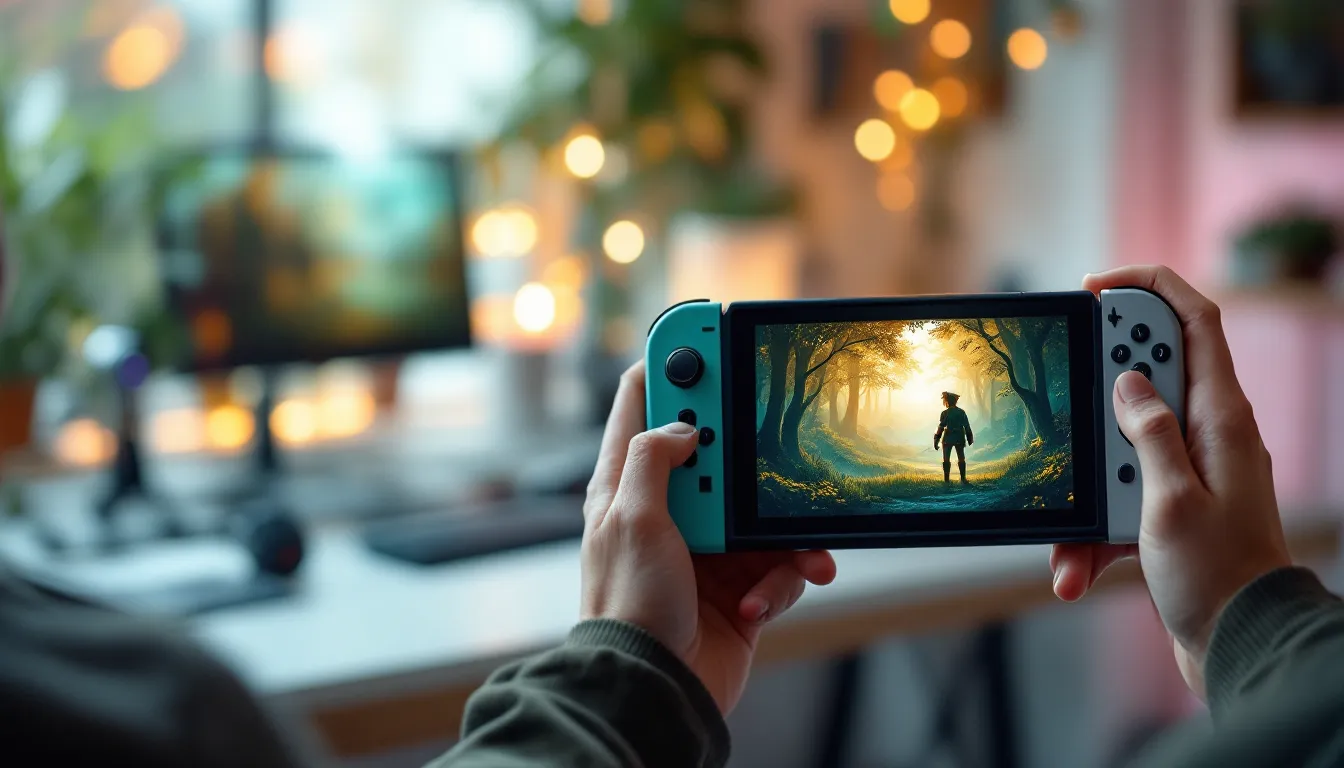
The Nintendo Switch has become the ultimate home for Zelda games, offering players a chance to experience Link’s most iconic adventures in portable form. Whether you’re a longtime fan of the franchise or jumping in for the first time, the Switch library features an impressive selection of Zelda titles spanning multiple generations. From the groundbreaking open-world design of recent entries to the beloved classics that started it all, there’s never been a better time to jump into the world of Hyrule. This guide covers every major Zelda game available on Switch, helping you find the perfect adventure based on your interests and gaming style.
The platform’s versatility, combining handheld portability with docked console power, makes it the ideal way to experience these games. You can tackle a full dungeon during your commute or spend hours exploring vast worlds from your couch. Here’s everything you need to know about playing Zelda games on Switch and which ones deserve your time.
Key Takeaways
- Breath of the Wild and Tears of the Kingdom are groundbreaking open-world Zelda games on Switch that revolutionized the franchise with systems-based design and creative problem-solving mechanics.
- The Nintendo Switch’s hybrid nature—combining handheld portability with docked console power—makes it the ideal platform for experiencing Zelda games anywhere, anytime.
- Classic Zelda titles like Link’s Awakening, Twilight Princess, and A Link to the Past are available on Switch, letting you experience the franchise’s evolution across multiple gaming eras.
- Newcomers should start with Breath of the Wild for modern open-world design, or Link’s Awakening for traditional dungeon-focused gameplay based on personal preference.
- Spin-off games like Cadence of Hyrule (rhythm roguelike) and Age of Calamity (action musou) offer unique alternative experiences within the Zelda universe.
- The Switch library offers something for every gamer, from linear narratives to experimental gameplay styles, with no wrong entry point into the franchise.
Why Nintendo Switch Is The Perfect Platform For Zelda
The Nintendo Switch fundamentally changed how we play Zelda games. Legend of Zelda Nintendo titles have always demanded exploration and extended play sessions, but the Switch’s hybrid nature means you can experience these adventures anywhere. You’re not tethered to a television or limited to a handheld screen, you get both.
This flexibility matters more than it sounds. Breath of the Wild and Tears of the Kingdom are designed for experimentation and discovery, things that flourish when you can play in short bursts or long sittings. The Switch’s controller layout also translates Zelda gameplay beautifully, with responsive motion controls for aiming and an intuitive button scheme that feels natural whether you’re holding a single Joy-Con or the full controller.
The library itself is comprehensive. Unlike previous Nintendo consoles, the Switch hosts new Zelda entries alongside remastered classics, spin-offs, and unique remakes. You can play through the entire franchise’s history on one device. The eShop makes them all instantly accessible, and physical versions are easy to find secondhand if you prefer cartridges.
Performance is solid across all Switch Zelda titles. While some games show the system’s age when docked, the games run acceptably in both modes. Frame rate dips happen occasionally in demanding areas, but they don’t interrupt the core experience. Developers at Nintendo have mastered optimizing for the Switch’s hardware, ensuring every Zelda game on Switch delivers what the franchise demands: immersive, uninterrupted adventure.
Breath Of The Wild: The Game That Redefined The Franchise
Breath of the Wild is the flagship Zelda game on Switch and arguably the most important entry in the entire franchise. Released alongside the console in March 2017, it fundamentally changed what a Zelda game could be. This isn’t just nostalgia talking, the game earned near-universal critical acclaim and spawned countless imitators across the industry.
The shift to open-world design meant abandoning the traditional formula of linear dungeons and guided progression. Instead, players face a massive world with no prescribed path. You can see a mountain and climb it. You can ignore the main story completely and hunt shrines, collect armor, or experiment with physics puzzles. This freedom is intoxicating, especially for players used to more structured experiences.
Control is intuitive and responsive, which is essential when the game gives you this much agency. Whether you’re using handheld mode or docked, the controls feel responsive and precise. The Joy-Con controllers handle motion aiming for bow combat surprisingly well, accurate enough that you don’t feel cheated by precision shooting.
Gameplay And Open-World Innovation
BotW’s genius lies in its systems-based design. Everything interacts with everything. Fire spreads realistically. Water conducts electricity. Metal objects stick to magnets. This creates endless possibilities for problem-solving. You might freeze water to cross a lake, ignite grass to create an updraft, or use a wooden shield as a snowboard. Subsequent updates added harder difficulty modes and the Master Mode variant, which ramped up enemy toughness and added inventory constraints.
Weapons and gear break, which sounds controversial until you realize it encourages experimentation. You don’t hoard that legendary sword, you use it and find something equally good. This creates a constant sense of discovery.
Dungeons exist too, though they’re optional. The four Divine Beasts serve as main dungeons and can be tackled in any order. They’re shorter than traditional Zelda dungeons but smartly designed around specific mechanics. Shrine dungeons offer bite-sized challenges throughout the world, perfect for gaming in short bursts.
Version 1.6.0 (the final update from 2022) fixed various issues and added quality-of-life improvements. The game runs at 30 FPS most of the time in both handheld and docked modes, occasionally dipping in demanding areas, but it’s stable enough that most players won’t notice.
Story And Characters
The narrative takes a backseat to exploration, which bothers some players and liberates others. You wake up with amnesia and learn that you’ve failed once before. Your task: defeat Calamity and save Hyrule. The story beats are told through optional memories scattered throughout the world. You can ignore them or hunt them all down, the game doesn’t force narrative exposition on you.
Characters are charming even though limited screen time. The champions you meet have distinct personalities and motivations. Their story, revealed through memories and dialogue, adds emotional weight to your journey. Voice acting is generally solid, though some dialogue skews toward generic fantasy tropes.
The ending is divisive. Some love its ambiguity and refusal to explain everything. Others find it unsatisfying. Either way, Breath of the Wild prioritizes player agency over linear storytelling. You’re not following a predetermined path, you’re carving your own adventure through Hyrule.
Tears Of The Kingdom: The Ultimate Sequel
Tears of the Kingdom arrived in May 2023 as the long-awaited sequel to Breath of the Wild, and it somehow expanded on an already massive game. Rather than starting from scratch, Nintendo iterated on the foundation and added transformative mechanics that shift how you approach exploration and puzzle-solving.
The build system is the star feature. You can attach almost anything to almost anything. Attach a mine cart to wooden planks and create a makeshift car. Combine propellers, batteries, and platforms to build flying machines. Glue together weapons to create hybrid tools. This system is beautifully open-ended, encouraging wild creativity. More importantly, it means there are countless solutions to every problem.
Zonai devices (glowing mechanical components scattered throughout the world) provide the building blocks. These are essential to experimentation, rewarding exploration. Finding a new device type feels genuinely exciting because it opens new possibilities. The game trusts players to figure things out, rarely holding hands.
Version 1.2.1 (current as of 2026) addressed performance and fixed various bugs. The game maintains 30 FPS more consistently than BotW, with the occasional dip in heavily detailed areas. Load times are reasonable, and frame pacing is generally stable.
New Mechanics And Building Systems
The fusion system lets you combine weapons, shields, and bows with monster parts and materials to create hybrid gear. Fuse a wooden sword with a monster horn and you get increased damage. Combine a bow with a bomb flower and arrows become explosive projectiles. This system incentivizes using trash items you’d normally ignore, everything becomes potential fuel for improvement.
Ascend and descend abilities let you phase through ceilings and floors. This sounds simple, but it fundamentally changes dungeon and cave design. No wall is impassable. No puzzle is unsolvable. The environmental storytelling becomes richer when you realize you can circumvent traditional obstacles. Some players see this as reducing challenge: others embrace the freedom it provides.
Rewind mechanics for specific objects add puzzle flexibility. You can reverse a rolling boulder’s movement, for instance. Combined with time-stopping and slow-motion, you have tools for creative solutions.
Combat remains largely unchanged from BotW. Parrying and dodging are still essential, and the stamina system creates resource management tension. The expanded arsenal makes combat feel fresher, though difficulty is similar to BotW on standard mode.
Expanded World And Exploration
The map is roughly the same size as BotW, but Nintendo doubled down on vertical exploration. Sky islands float above the world, reachable through various means. Underground caverns sprawl beneath the surface. These three layers, surface, sky, and underground, create a sense of depth that exceeds what BotW offered.
Finding new areas remains rewarding. You’ll stumble upon hidden communities, meet new characters, and discover environmental storytelling everywhere. The sky islands aren’t just floating cosmetics, they contain shrines, devices, and lore that enrich the world.
Dungeons are more substantial than BotW’s four Divine Beasts. The five main dungeons are larger, more complex, and less linearly designed. You enter through any entrance and tackle areas in whatever order you want. Some solutions require multiple visits or specific sequences, but nothing is truly softlocked by poor planning. The design philosophy remains player-friendly while offering more traditional Zelda dungeon experience.
Roaming enemies create dynamic encounters. You might stumble into a giant boss fight unprepared, which forces adaptation. Some players love the chaos: others find it frustrating. Either way, it creates memorable moments that feel less choreographed than traditional Zelda encounters.
Classic Zelda Titles And Remakes Available On Switch
Beyond the two mainline modern entries, the Switch hosts several classic Zelda games. Nintendo has strategically ported fan-favorite titles, allowing new audiences to experience legendary adventures. These aren’t just emulated ROMs, many received thoughtful remakes that respect the originals while updating controls for modern expectations.
The collection spans multiple eras of Zelda design, so you can literally trace the franchise’s evolution. Starting with A Link to the Past and seeing how it progresses through Wind Waker, Twilight Princess, and beyond shows you where the modern design philosophy originated.
Link’s Awakening And Link To The Past
Link’s Awakening (2019) is a gorgeous remake of the 1993 Game Boy game. Nintendo reimagined the pixel art in a charming diorama style, making the tiny island of Koholint feel like a three-dimensional pop-up book. The controls translated to modern standards beautifully, pick up items, navigate menus, and solve puzzles all feel natural with modern controls.
The game is shorter than BotW or TotK, expect 10-15 hours for completion, but it’s perfectly paced. Dungeons are classic Zelda design: self-contained challenges with environmental puzzle-solving. You acquire tools throughout each dungeon that unlock new areas, creating satisfying progression. The story is surprisingly emotional for such a small game, dealing with memory and dreams in ways that still hit hard decades later.
A Link to the Past (1992) arrived on Switch as an NES app within Nintendo Switch Online, which requires a subscription. This is the original 2D Zelda formula: parallel worlds, complex dungeons, and puzzle-driven progression. If you can get past the dated controls (mapped to Joy-Cons acceptably, but still Game Boy feel), the game holds up remarkably well. The puzzles are clever, dungeons are imaginative, and the sense of exploration is genuine for a game from 1992.
Skyward Sword And Twilight Princess Ports
Skyward Sword HD (2021) brought motion controls to the forefront, which caused division. The original Wii game relied on waggling the controller to swing your sword, but HD uses button inputs by default. You can enable motion controls if you want authentic experience, but it’s optional. This flexibility makes the game far more accessible. The story is the most character-driven in the franchise, focusing on the origin of Hyrule itself. Combat is deliberate and methodical, you’re positioning for strikes, not mindlessly mashing buttons.
Skyward Sword’s structure is linear compared to BotW, with dungeons accessed through an overworld that requires traversal. This pacing feels outdated compared to open-world design, which some players find tedious. The handholding from your fairy Fi, which offers constant guidance, grates after a while. Still, the world-building and story justify the time investment for fans interested in Zelda lore.
Twilight Princess HD (2016) is perhaps the most underrated Zelda port. Originally a Wii game, this version uses traditional controls (no motion waggling required). The game is massive, expect 35-45 hours, and sprawling. You transform into a wolf, explore massive dungeons, and navigate a darker take on Hyrule. The motion control sword swings (optional in this port) are actually intuitive here.
Twilight Princess is often overlooked in “best Zelda” discussions, but it deserves attention. The dungeons are exceptional, maybe the best-designed in the franchise. The story balances darkness with genuine character moments. Midna, your imp companion, is genuinely funny and develops real personality. The game struggles with pacing in the middle section, and some side quests feel like time-wasting fetch quests, but the core adventure is excellent. Recent guides on Zelda game order highlight why Twilight Princess remains beloved even though being older.
Spin-Off Adventures: Cadence Of Hyrule And Age Of Calamity
Not every Zelda game on Switch is a traditional adventure. Nintendo has experimented with the license, creating spin-offs that offer completely different experiences while maintaining the charm and world of Hyrule.
Cadence of Hyrule (2019) is a roguelike rhythm game set in Hyrule. You control Link (or Zelda, or a custom character) through top-down dungeons, moving to the beat of original music. This sounds gimmicky, but it’s genuinely fun. The roguelike structure means you’ll fail runs and learn from mistakes, slowly unlocking permanent upgrades. The music is excellent, with compositions that shift between classic Zelda themes and original pieces. If you enjoy roguelikes and have any appreciation for music, this is worth your time. It’s surprisingly deep even though its accessibility.
Age of Calamity (2020) is a musou-style action game, basically a Dynasty Warriors-style game set in the Zelda universe. You control various champions across battles depicting the fall of Hyrule. The combat is all about crowd control, you’re running through massive groups of enemies, triggering flashy combos. It’s cathartic and surprisingly strategic once you learn positioning and ability timing.
Age of Calamity isn’t a traditional Zelda game, and it doesn’t try to be. It’s a action-focused game that explores the Calamity’s lore from BotW. The story attempts to add depth to champions you met briefly in BotW, and the fan service is real. If you want Hyrule Warriors-style combat with Zelda aesthetics, grab it. Just understand you’re getting a Warriors game, not a Zelda game dressed up in Dynasty Warriors clothing.
Both spin-offs offer substantial content, 50+ hours if you’re completing everything. Neither is essential to enjoying the main franchise, but they’re legitimate entries worth experiencing if their gameplay styles appeal to you.
Which Zelda Game Should You Play First
The beauty of the Switch’s Zelda library is that entry order matters less than personal preference. Unlike traditional franchises with strict continuity, Zelda games tell standalone stories. You won’t be lost jumping into any title.
For newcomers, start with Breath of the Wild. It’s the most accessible entry, the most revolutionary design, and the gateway drug to the franchise. Its open-world structure means you can learn systems at your own pace. No pressure, no mandatory storyline progression. Spend 200 hours exploring or finish in 30, both are valid ways to experience the game.
If you finish BotW and want the natural next step, Tears of the Kingdom is your answer. It continues Link’s journey and assumes you understand BotW’s mechanics. TotK refinement of those systems makes it a worthy successor.
For players who want traditional Zelda dungeon design, Link’s Awakening is the perfect gateway. It’s shorter, more tightly designed, and shows classic Zelda architecture. The story is emotional and self-contained. You won’t feel rushed through massive exploration zones.
If you want “peak Zelda lore” and don’t mind older game design, Twilight Princess is exceptional. Fair warning: it’s long and somewhat dated in pacing. You need patience, but the payoff is genuine.
For players interested in how Zelda games have evolved, the Switch library lets you play through gaming history. You can start with A Link to the Past (if you have Switch Online), move through Twilight Princess and Skyward Sword, then experience the revolution with BotW. Each game shows architectural choices that led to modern design philosophy.
Avoid starting with Cadence of Hyrule unless you already love roguelikes and rhythm games. Age of Calamity works better as a BotW supplement than as a series entry point. According to Nintendo Life’s comprehensive guide, most newcomers benefit from starting with BotW or Link’s Awakening based on whether they prefer open-world or traditional dungeon exploration.
The ideal experience depends on you:
- Want modern, revolutionary design? Breath of the Wild
- Finished BotW and need more? Tears of the Kingdom
- Prefer dungeon-focused gameplay? Link’s Awakening or Twilight Princess
- Interested in Zelda history? Play multiple titles in release order
- Like rhythm games or roguelikes? Cadence of Hyrule
- Want action-focused gameplay? Age of Calamity
There’s genuinely something for every type of gamer here. The Switch has become the definitive home for experiencing the entire Zelda franchise.
Conclusion
The Nintendo Switch hosts the most comprehensive Zelda games library ever assembled on a single device. Whether you’re after groundbreaking modern design with Breath of the Wild and Tears of the Kingdom, classic dungeon-crawling with Link’s Awakening and Twilight Princess, or experimental spin-offs, the platform delivers.
Each game offers a different flavor of adventure, from open-world exploration to linear storytelling to rhythm-based roguelikes. The flexibility of the Switch, handheld or docked, short bursts or extended sessions, makes it the ideal platform for these games. You can start your adventure anywhere, and you’ll find something worthwhile.
There’s no wrong entry point. Jump in wherever your interests lie, and enjoy discovering why Zelda remains one of gaming’s most beloved franchises. According to IGN’s comprehensive reviews, the current Switch Zelda collection represents the franchise at its finest across multiple eras. You’re not just getting games, you’re getting a piece of gaming history, all in your hands.