

PS4 is home to one of the most stacked Final Fantasy libraries on any console. Whether you’re curious about jumping into the series for the first time or you’re a veteran looking to revisit classics, the PS4 offers an incredible range of Final Fantasy games spanning different eras, genres, and gameplay styles. From the genre-defining remake of Final Fantasy VII to the sprawling open world of Final Fantasy XV, from the tactical-heavy X to the divisive-but-beloved XIII trilogy, it’s all there. This guide breaks down every notable Final Fantasy game on PS4, walks you through the release order, and gives you the actionable tips you need to get the most out of each experience. Whether you care about story, combat mechanics, or just want to know which game to tackle first, we’ve got you covered.
Key Takeaways
- Final Fantasy PS4 offers one of the largest and most diverse Final Fantasy libraries across all platforms, spanning multiple eras, genres, and gameplay styles from turn-based classics to modern action games.
- Final Fantasy VII Remake is the best starting point for newcomers seeking cinematic storytelling and modern action combat, while Final Fantasy X works better for those preferring traditional turn-based JRPG mechanics.
- PS4 Final Fantasy games feature exceptional quality-of-life improvements including trophy support, fast load times, and modernized interfaces that make both new releases and remasters of vintage titles feel contemporary.
- Each Final Fantasy PS4 game has a distinct combat system requiring different strategic approaches, from VII Remake’s pause-and-command mechanics to X’s turn-based tactics and XV’s action-oriented positioning.
- Final Fantasy XIV Online on PS4 delivers a complete MMO experience with compelling narrative and cross-platform play, though the base game’s early levels require patience before content becomes engaging.
- The Final Fantasy series on PS4 prioritizes art direction and narrative depth over raw technical specs, ensuring games remain timeless regardless of hardware limitations.
The Final Fantasy Legacy On PlayStation 4
Why PS4 Became The Home For Final Fantasy
The PS4 wasn’t just a platform for Final Fantasy, it became the platform. Square Enix poured massive development resources into PS4 Final Fantasy titles, treating the console as ground zero for some of the franchise’s most ambitious projects. This happened for good reason: the PS4’s install base was enormous during its lifecycle, and the hardware capabilities allowed developers to realize their visions in ways previous generations couldn’t.
The final fantasy release dates on PS4 span nearly the entire console’s lifespan. Final Fantasy Type-0 launched early in the PS4’s lifecycle (2015), while Final Fantasy VII Remake arrived in 2020 and its sequel Rebirth hit PS5 in 2024. In between, every major numbered entry got either an original release or a remaster. This consistency made PS4 feel like the spiritual home of the franchise.
What Makes PS4 Final Fantasy Games Stand Out
PS4 Final Fantasy games benefited from both technological advancement and narrative ambition. The jump to current-gen hardware meant no compromises on cutscene quality, character models, or world detail. When you boot up Final Fantasy VII Remake or Final Fantasy XV, you’re not experiencing a scaled-down vision, you’re seeing what Square Enix intended.
The variety is equally important. The PS4 catalog isn’t just sequels and remakes: it includes experimental titles, spin-offs, and genres Final Fantasy hadn’t fully explored. Final Fantasy XIV Online redefined the MMO space. Final Fantasy XV pushed the series toward open-world exploration. Dissidia Final Fantasy NT brought the franchise into fighting games. This diversity means there’s genuinely something for every type of gamer, whether you want turn-based strategy, real-time action, or community-driven PvE content.
The technical prowess also extended to quality-of-life features. PS4 remasters of older games, like Final Fantasy X HD and Final Fantasy XIII, didn’t just upscale graphics: they included trophy support, faster load times, and streamlined interfaces that made vintage games feel modern enough to hold up in 2024.
Ranking The Best Final Fantasy Games On PS4
Final Fantasy VII Remake: A Modern Masterpiece
If you’re starting with one PS4 Final Fantasy game, it’s probably Final Fantasy VII Remake. This 2020 reimagining is a beast: a 40-50 hour action-RPG that expands the events of the original PS1 classic’s opening chapters into a full narrative experience. The combat system ditches the turn-based formula of the 1997 original in favor of real-time action with tactical elements, think more Devil May Cry than Final Fantasy, but with pause-to-menu strategy layered in.
The remake’s genius is how it respects the source material while carving its own path. You’ll recognize iconic scenes and characters, but the story pivots in unexpected directions that even franchise veterans won’t predict. The voice acting is exceptional, the character development goes deeper than the original, and the Midgar setting feels alive in ways that justify the expanded scope. Performance on PS4 sits around 30 FPS on a standard unit, with some frame pacing issues, but it’s entirely playable. PS5 and the standalone Intergrade expansion offer 60 FPS options if you’ve upgraded.
One caveat: this game is the first part of a larger story. It ends on a cliffhanger, and the sequel (Final Fantasy VII Rebirth) landed on PS5. If you want closure quickly, manage expectations.
Final Fantasy XV: An Open-World Adventure
Final Fantasy XV (2016) is the franchise’s boldest swing toward Western-style open-world gameplay. You control Noctis, a prince on a road trip across the continent of Eos with his three best friends, hunting monsters, fishing, cooking meals around campfires, and generally just vibing while the world’s fate hangs in the balance.
The combat feels reactive and visceral. Noctis teleports around the battlefield, his friends flank enemies, and magic feels impactful but expensive, casting a spell costs HP, not just MP, forcing you to think about resource management mid-fight. The world is genuinely beautiful, with standout environmental design that makes exploration rewarding even if you’re just tooling around for side quests.
That said, XV is famously incomplete. Development was rocky, and the game shipped with holes in the story that post-launch DLC, patches, and companion movies tried to fill. The base game still works as a standalone experience, but there’s a sense that you’re playing a gorgeous sketch of something bigger rather than a finished canvas. It’s still worth playing for the road trip vibes and the pure joy of discovery, but temper your expectations around narrative cohesion.
Final Fantasy X And X-2 HD Remaster
Final Fantasy X (2001) is widely considered one of the best entries in the series, and the PS4 remaster (2016) proves it holds up. This is a traditional turn-based JRPG with one of the most compelling stories Square Enix ever told: a pilgrimage across a dying world, relationships that actually feel earned, and a twist ending that lands harder than most games manage.
The combat system is turn-based but strategic. The active time battle system lets you switch party members mid-fight without penalty, which opens up tactical depth most modern JRPGs have abandoned. Boss fights demand you think ahead, not just mash attack buttons. The summons, called Aeons, look stunning and serve as powerful trump cards that feel meaningful to deploy.
X-2, bundled in the same remaster, is a harder sell. It’s a direct sequel set two years later, with a lighter tone, a pop-idol aesthetic, and a job system that’s more experimental than X’s character-driven progression. Some fans love it: others feel it undermines X’s perfect ending. Play X first, and decide for yourself whether X-2’s continuation is worth your time. Both games run beautifully on PS4 with solid load times.
Final Fantasy XIII And The Lightning Trilogy
Final Fantasy XIII (2010) is historically contentious, but the PS4 remaster (2014) with quality-of-life updates makes it more approachable than the original. The core game is a linear corridor-crawler for the first 30 hours, which alienated players expecting exploration. But the combat system is legitimately excellent: a fast-paced real-time affair where you assign roles to party members and watch the tactical interplay unfold. It rewards planning and punishes button-mashing.
The story follows Lightning and her companions through a sci-fi world of floating continents and crystal-aligned mythology. The narrative is dense, occasionally confusing, and doesn’t do much explaining until you’re deep in. But if you engage with it, there’s genuine thematic weight buried under the convoluted setup.
Final Fantasy XIII-2 and Lightning Returns: Final Fantasy XIII follow the same character across timelines and a dying world respectively. XIII-2 improves pacing and adds a monster-catching mechanic. Lightning Returns is a time-limit-driven action game where you manage a 13-day countdown to save the world. The whole trilogy is on PS4. If you have the patience for XIII’s opening act and curiosity about where the story goes, the trilogy offers a complete narrative arc that’s unique in the franchise. Just know it’s not for everyone.
Essential Tips For New Final Fantasy Players
Choosing Your First Final Fantasy Game
Unless you’re committed to playing every final fantasy game on PS4, you need to pick a starting point. This depends on what you value:
If you want cinematic storytelling and modern action combat: Start with Final Fantasy VII Remake. It’s accessible to newcomers even though being a continuation, the story hooks immediately, and the combat feels responsive and fun from hour one.
If you want traditional turn-based combat: Jump to Final Fantasy X. It’s the most welcoming numbered entry for players new to the series, with a self-contained story and mechanics that feel timeless.
If you want exploration and side content: Try Final Fantasy XV. It’s the most “open” in terms of structure, and you can spend dozens of hours just wandering Eos without pushing the main story.
If you want to experience the franchise’s diversity: Pick one from each generation, X for turn-based, XV for action-adventure, VII Remake for narrative depth. Then branch out to spin-offs.
Don’t feel obligated to play in release order. Each game is self-contained: knowing final fantasy games in order of release is trivia, not requirement. Play what matches your current gaming mood.
Mastering Combat Systems Across Different Titles
Final Fantasy games don’t share a universal combat system, so learning one doesn’t auto-transfer.
Final Fantasy VII Remake uses a pause-and-command system. Hold L1 to slow time and queue up abilities. This feels frantic at first, but becomes fluid once you internalize the cooldowns and ability rotations. Always position Cloud away from enemy AOE, and keep Barret on materia duty since he’s your ranged DPS.
Final Fantasy XV requires active positioning. Warp in, deal damage, warp out when health dips. Don’t stand still: movement is defense. Use magic sparingly, it costs health and has a cast time, so deploy it when enemies are locked down by your party’s attacks.
Final Fantasy X rewards patience and swaps. Build teams that cover each boss’s resistances, swap in tanky characters for big hits, and abuse limit breaks when they’re available. The turn order (visible at the top of the screen) is your strategic bible, manipulate it with abilities that boost/reduce speed.
Final Fantasy XIII auto-plays a lot of attacks, but you’re assigning roles (Commando for DPS, Medic for healing, etc.). Don’t mash buttons: let the system work, and react by swapping roles when conditions change. This feels passive until you realize that role selection is where the real strategy lives.
Unlocking Side Quests And Hidden Content
Every PS4 Final Fantasy game hides content off the critical path. Knowing where to look separates casual playthroughs from completionists:
- Explore every area thoroughly. Games like XV and VII Remake reward backtracking once you gain new abilities. That chest you couldn’t reach in chapter 2 might unlock in chapter 5.
- Talk to NPCs repeatedly. Some side quests only activate after main story beats. A merchant who seemed irrelevant in hour 5 might offer a quest in hour 20.
- Watch for environmental cues. Glowing objects, doorways that look different, or areas that feel deliberately hidden usually lead to treasures, rare enemies, or mini-dungeons.
- Use in-game guides. Most PS4 Final Fantasy games include a quest log or bestiary that tracks what you’ve missed. Check it periodically.
- Hunt superbosses last. Games like X and XV hide optional ultra-difficult enemies that require post-game grinding and rare items. Defeat the main story first, then hunt trophies.
Trophy hunting is a rewarding secondary goal on PS4. Most games have 40-50 trophies, and many are tied to side content that extends playtime by 20-50 hours depending on the game.
Final Fantasy XIV Online: The MMO Experience
Getting Started With The Realm Reborn
Final Fantasy XIV Online (FFXIV) exists in a strange space on PS4: it’s a full-featured MMO running on console hardware, with cross-platform play linking PC, Mac, and PlayStation. The base game is called “A Realm Reborn” (sometimes shortened to “ARR”), and it’s free-to-play up to level 60 with some restrictions.
The early game assumes you know nothing about MMOs. Quests are plentiful and well-directed, combat is turn-based-ish (you queue abilities, they go off in global cooldown windows), and dungeons are 4-player instances that teach mechanics gradually. The story, honestly, is why people stay. Unlike most MMOs where story is optional window dressing, FFXIV’s narrative is genuinely compelling, it rivals single-player Final Fantasy games in character development and emotional payoff.
Joining a Free Company (the PS4 MMO equivalent of a guild) is crucial. FFXIV’s community is notably friendly compared to other MMOs, and guilds provide direction, friendship, and group content that’s far less intimidating than world PvP or open-world grind-fests.
One warning: ARR’s opening 50 levels drag. The main story quest (MSQ) is mandatory to unlock new content, and roughly half of it feels like filler. Power through it. Everything clicks after level 50.
Navigating Expansions And Endgame Content
Once you finish ARR, you’re looking at expansions. In order: Heavensward (levels 50-60), Stormblood (60-70), Shadowbringers (70-80), Endwalker (80-90), and Dawntrail (90+). Each expands the world, adds new jobs, and continues the overarching story.
Endgame is where FFXIV separates from single-player games. You’re not grinding for random drops: you’re farming “tomes” (currency) to buy gear, running “raids” in 8-player and 24-player formats, and chasing cosmetics and achievements. The current raid tier rotates every few months, so there’s always something new to tackle.
Here’s the reality: FFXIV on PS4 requires either a controller (which plays surprisingly well) or a keyboard-mouse setup via USB. Materia system, job balance, and meta do shift with patches. Fire yourself up to date with Game8 tier lists and job guides, which cover current meta builds and role breakdowns. If you hate the idea of commitment to an ongoing service game, skip FFXIV. But if you want a story-driven MMO with actual narrative weight, it’s the best option on PS4.
Spin-Offs And Related Final Fantasy Games
Dissidia Final Fantasy NT
Dissidia (2015, expanded as Dissidia Final Fantasy NT in 2018) is a fighting game featuring heroes and villains from across the entire franchise. It’s a 3v3 team-based brawler where two teams of three fight in arena-style maps, with summons, environmental hazards, and RPG-flavored progression mechanics layered on top of traditional fighting game combos.
This isn’t Street Fighter. It’s chaotic in the best way, with more emphasis on team synergy and map control than frame-data and hit confirms. Every character feels distinct, Cloud plays like a rushdown brawler, Tidus is a speed-based zoner, Terra has crowd-control magic. If you’ve got friends to play couch co-op with, it’s a blast. Solo play through arcade mode and RPG campaigns offers hundreds of hours of progression, cosmetics, and character unlocks.
The learning curve is steep for fighting game veterans used to traditional 1v1 formats, but newcomers might actually find the 3v3 structure forgiving since mistakes are less immediately punishing. GameSpot reviews offer detailed breakdowns of character tiers and matchup guides if you get serious about competitive play.
Final Fantasy VII Remake Intergrade
Intergrade (2021) is an expanded version of Final Fantasy VII Remake with new Yuffie DLC chapters and PS5 optimizations. If you’re on PS5, this is the definitive version. On PS4, Intergrade is technically the same game as the base Remake (available as a free upgrade if you own the original), but it costs more than the standard edition.
The Yuffie DLC (2 hours, separate campaign) gives you a ninja side story that expands lore and gives trophy hunters additional content. Performance-wise, PS4 runs both games identically, don’t pay extra for Intergrade unless you’re on PS5 or desperate for the Yuffie chapter.
Other Notable PS4 Final Fantasy Titles
Beyond the heavy hitters, PS4 hosts a few other Final Fantasy entries worth mentioning:
Final Fantasy Type-0 HD (2015) is an action-heavy military academy story with real-time combat and permadeath mechanics (characters can permanently die, affecting your roster). It’s niche and rough around the edges, but if you want something experimental and story-driven, it’s here.
Dissidia Final Fantasy Opera Omnia is a gacha mobile game that’s free on PS4. It’s an auto-battler with tap-based combat. If you want Final Fantasy flavor in bite-sized sessions, it’s harmless. Don’t expect console-quality production.
Final Fantasy X: Eternal Calm and other spin-offs exist in digital form, but they’re mobile/browser ports rather than native PS4 games. The main trilogy (X, X-2, XIII) covers most of what matters.
Performance, Graphics, And Technical Considerations
PS4 vs PS5 Performance Differences
If you own both PS4 and PS5, performance does matter for certain games. Final Fantasy VII Remake runs at 30 FPS on PS4 (with occasional dips) and 60 FPS on PS5. For an action game with real-time combat, that’s a noticeable difference, 60 FPS makes dodging and weaving through attacks feel snappier.
Final Fantasy XV, by contrast, targets 30 FPS on both systems (though PS5 achieves it more consistently). Final Fantasy X HD and XIII are capped at 60 FPS on both. Final Fantasy XIV runs at 60 FPS on current-gen console but benefits from faster loading on PS5 SSD.
Graphically, PS5 versions (where they exist) feature better draw distances, higher-resolution textures, and faster asset streaming. But PS4 versions hold up well, Square Enix’s art direction carries games even when raw processing power lags. Don’t let PS4 hardware scare you away: these games are all designed to run and look great on the console.
Optimizing Your Gaming Experience
A few practical tweaks improve PS4 Final Fantasy gaming:
Storage: Most games require 50-100GB installs. Final Fantasy VII Remake sits at 100GB. Make sure you’ve got space before downloading: PS4 needs headroom for shader caches and patches.
Internet: FFXIV requires a solid connection. 15+ Mbps download is fine, but don’t expect flawless performance on WiFi if you’re playing the MMO competitively. Ethernet is worth the cable if you’re serious.
Controller batteries: Games like XV and VII Remake have real-time combat with minimal pause windows. Drained batteries mid-boss-fight are frustrating. Keep spares charged.
Game mode vs. Standard mode: Some TVs have a “game mode” that reduces input lag. If your TV supports it, enable it. The difference is subtle but real, especially in action-heavy games like Remake.
Disable motion controls: Most PS4 Final Fantasy games support motion controls for certain actions. They’re optional and sometimes intrusive. Disable them in settings if they’re annoying. Push Square guides often cover these toggles in-depth for specific titles.
Patch before playing: Always let games update. Patches fix bugs, improve performance, and add post-launch content. Some games are genuinely unplayable until their day-one patch installs.
Loading times on PS4 vary wildly. XV has brutal load screens (45 seconds between areas on standard PS4), while X/X-2 loads almost instantly. It’s not something you can fix, but knowing what to expect helps you plan play sessions.
Conclusion
PS4’s Final Fantasy library is genuinely stacked, and the best game for you depends entirely on what you’re chasing. Want a remake that respects the original while carving its own path? Final Fantasy VII Remake. Prefer traditional turn-based combat with a bulletproof story? Final Fantasy X. Curious about an ongoing MMO community experience? Final Fantasy XIV. Looking for experimental gameplay? XIII and XV both swing for the fences in different ways.
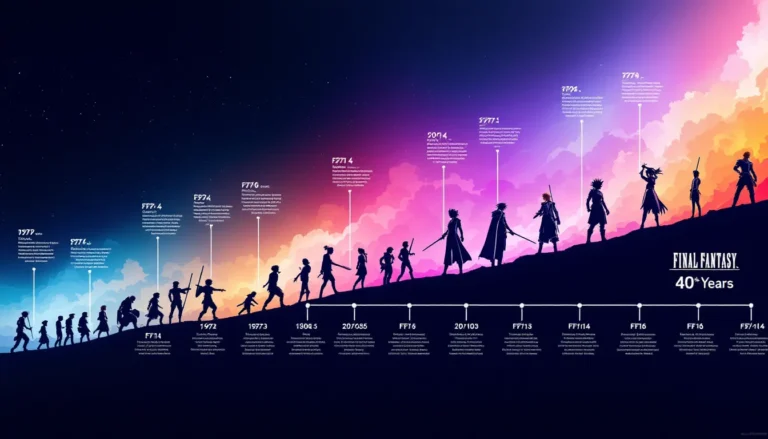
The final fantasy series in order across PS4 spans decades of development philosophy, from the turn-based era of X, through the action-focused experiments of XIII and XV, to the real-time hybrid combat of VII Remake. None of them feel dated because Square Enix invested in art direction and narrative weight that transcends technical specs.
Start with what sounds fun, commit to 10 hours to see if it clicks, and pivot if it doesn’t. There’s no “required” Final Fantasy experience anymore: there’s just the one that resonates with you. And on PS4, you’ve got the depth to find it.