

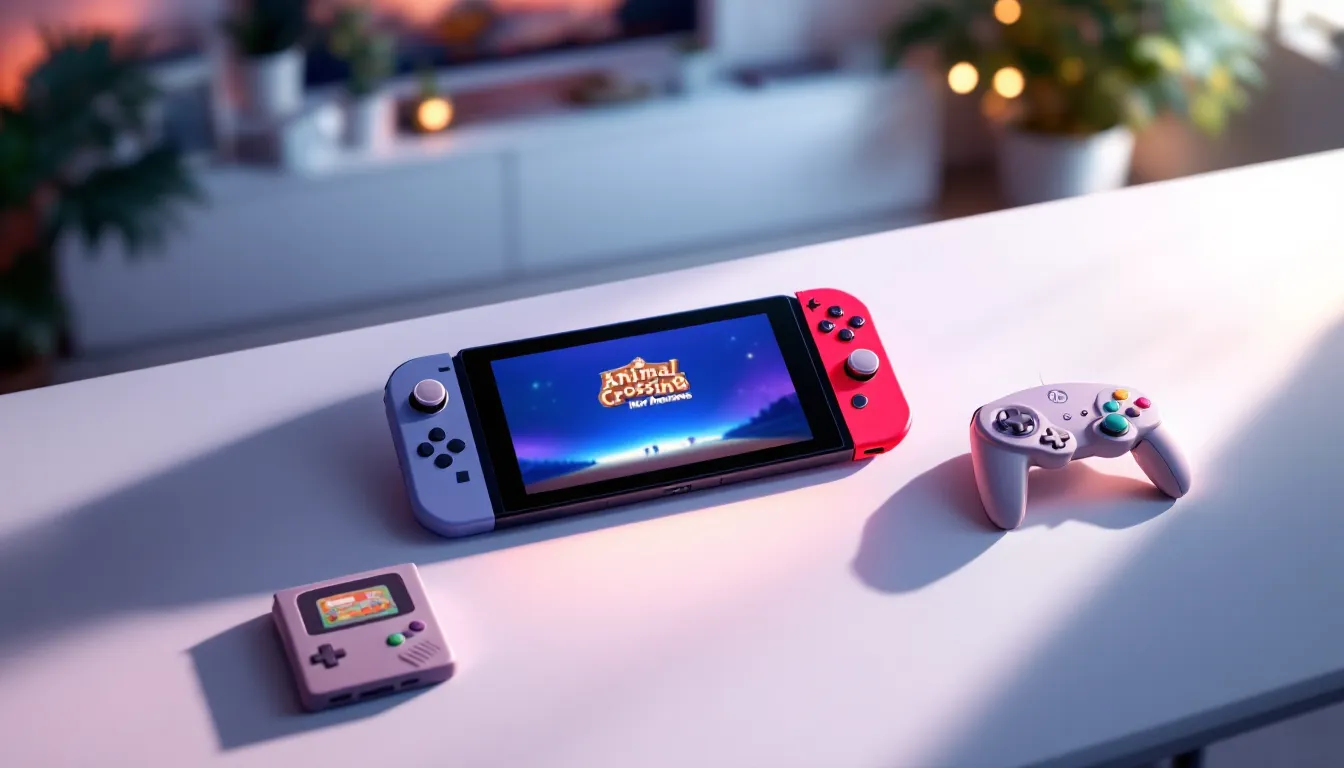
Animal Crossing has been quietly revolutionizing how we think about video games for over two decades. Unlike most franchises that thrive on competition, high stakes, and constant action, Animal Crossing carved out its own path with relaxation, creativity, and a living world that changes whether you’re playing or not. If you’re curious about when Animal Crossing came out or how this unlikely series became a cultural phenomenon, you’re about to discover a timeline that spans multiple console generations and reshaped what millions of players expect from their gaming experiences. From its humble beginnings on the Nintendo 64 to becoming a global sensation with New Horizons on the Switch, Animal Crossing’s journey is one of consistent innovation and unwavering charm.
Key Takeaways
- Animal Crossing came out on April 14, 2001, on the Nintendo 64 in Japan, introducing a real-time life simulation that prioritized relaxation and creativity over competition.
- The franchise has evolved across nearly a dozen Nintendo platforms—from N64 to Switch—with each iteration adding meaningful features like online connectivity, mayoral governance, and island terraforming while preserving the core peaceful gameplay.
- Animal Crossing: New Horizons became a global phenomenon with over 45 million copies sold, proving that relaxation-based games could achieve massive commercial success in an industry dominated by competitive titles.
- Community and creative expression have always been central to Animal Crossing’s identity, expanding from local village observation to cross-platform online sharing and social media content creation.
- The franchise has sustained over 25 years of success by respecting player time and agency without resorting to addiction mechanics, FOMO-driven monetization, or fail states.
The Origins: Animal Crossing’s Debut in 2001
Nintendo 64 and Game Boy Advance Versions
The original Animal Crossing released in Japan on April 14, 2001, exclusively on the Nintendo 64. This was the franchise’s first appearance, and it introduced the core concept that would define the series: a real-time simulation where players move to a village populated by adorable anthropomorphic animals. The game’s Japanese name is Doubutsu no Mori (どうぶつの森), which translates to “Forest of Animals”, a fitting title for the nature-focused gameplay that would become synonymous with the franchise.
Gamers in North America didn’t get their hands on the original Animal Crossing until over a year later, when it launched on September 17, 2002, also on N64. By that point, Nintendo was already working on expanded versions. The Game Boy Advance received Animal Crossing: Population Growing in December 2001 in Japan, which brought the charm of the original to a portable format. This GBA version later released internationally as part of the Game Boy Advance library, proving that Animal Crossing could work on different hardware and platforms.
Early Game Mechanics and Reception
The first Animal Crossing game established mechanics that remain core to the franchise today. Players didn’t battle enemies or solve complex puzzles, instead, they fished, caught insects, dug for fossils, and decorated their homes. Real-time elements meant that the in-game time matched actual clock time, so you could only catch certain fish or insects during specific seasons and times of day. This created a genuine sense of living in a persistent world rather than playing a traditional game with levels and endings.
Reception was immediately positive among reviewers and players who recognized something special. Video game journalists and analysts at VGC and other outlets praised the game’s accessibility and charm, noting that it appealed to demographics traditionally underrepresented in gaming. The N64 version sold steadily and built a dedicated fanbase, though commercial success was modest compared to major franchises of the era. What mattered more was that Nintendo had proven a concept: a game about peaceful living and creativity could stand alongside action games and beat-em-ups. This foundation would allow the franchise to grow exponentially.
The GameCube Era: Expanding the Franchise (2002-2005)
Animal Crossing for GameCube Launch and Impact
When Nintendo’s GameCube launched in November 2001 in Japan and May 2002 in North America, Animal Crossing for GameCube arrived as a system seller that few predicted. The GameCube version released on December 14, 2001 in Japan and July 16, 2002 in North America, becoming the franchise’s most significant release to that point. This wasn’t just a port of the N64 game, it was substantially enhanced with better graphics, additional content, and a significantly expanded world. The GameCube Animal Crossing became the version most players experienced during the early 2000s, and it’s the one often referred to as the “first” by casual fans who weren’t hunting for cartridges in the N64 era.
The GameCube version included exclusive villagers, items, and music that differentiated it from previous releases. Towns could feel more developed and personalized. The visual upgrade from N64 to GameCube meant that your cozy little village looked genuinely charming on a big screen, with better animations and more detailed textures. This version proved that Animal Crossing could sustain console audiences who weren’t interested in fast-paced action, a revelation that fundamentally changed how publishers thought about game design and genre diversification.
Wild World on Nintendo DS (2005-2006)
The Nintendo DS launch in 2004 opened new possibilities for portable gaming with its dual screens and touch functionality. Animal Crossing: Wild World arrived in Japan on November 23, 2005, followed by a North American release on December 5, 2005. This was the first Animal Crossing game specifically designed for a handheld system from the ground up, leveraging the DS’s unique capabilities while maintaining the relaxing core experience.
Wild World didn’t just copy the GameCube formula, it adapted brilliantly to the DS’s portable nature. The touch screen added intuitive controls for drawing, fishing, and inventory management. The Wi-Fi connectivity allowed players to visit other towns online, a groundbreaking feature for the early-to-mid 2000s that foreshadowed how social elements would become central to the franchise. Wild World became a phenomenon on the DS, selling millions of copies and introducing an entirely new generation to Animal Crossing. At that point, the franchise had proven it could thrive across multiple console generations and hardware types, setting the stage for decades of continued growth.
Wii and Wild World: Bringing Animal Crossing to a Broader Audience
City Folk’s Release and Console Expansion
By 2008, the Wii had become a cultural phenomenon, with motion controls and accessibility attracting audiences beyond traditional gamers. Nintendo’s response was Animal Crossing: City Folk (also marketed as Animal Crossing: Let’s Go to the City in Europe and Australia), which released on November 16, 2008 in North America. This Wii edition brought the franchise to living rooms during the console’s peak period, when the Wii’s market penetration was massive.
City Folk built on Wild World’s foundation while introducing urban areas players could visit, expanding the scope beyond the small village setting that defined earlier games. The game maintained the core relaxation and creativity that made Animal Crossing special, but now families could gather around a television and take turns living in their peaceful town. The Wii Remote’s pointer controls added a different tactile feel to fishing and other activities. While City Folk didn’t quite match Wild World’s cultural impact, it solidified Animal Crossing as a multi-platform franchise that could succeed on any Nintendo hardware.
Nintendo Wii’s Role in Franchise Growth
The Wii period was crucial for Animal Crossing’s trajectory. The console’s motion controls and focus on accessibility meant developers had to rethink how to present Animal Crossing’s gameplay mechanics. Rather than seeing this as a limitation, it became an opportunity for innovation. Motion-controlled fishing and insect catching added physical interaction that resonated with players seeking active gameplay without competitive pressure.
More importantly, the Wii’s family-oriented marketing directly aligned with Animal Crossing’s appeal. Parents and kids weren’t just playing together in the same room, they were literally cooperating within the game, taking turns, deciding on decorations, and planning seasonal events together. This multiplayer dimension strengthened the social bonds that the franchise fostered. By the end of the Wii era, Animal Crossing had demonstrated remarkable longevity and reach across three major console generations. The franchise was no longer a curiosity or niche title: it was an established pillar of Nintendo’s portfolio with a loyal, growing playerbase.
The 3DS Revolution: New Leaf and Portable Gaming (2012-2013)
Animal Crossing: New Leaf Development and Features
The Nintendo 3DS brought glasses-free 3D gaming to handhelds, and Animal Crossing: New Leaf launched on July 7, 2012 in Japan and June 9, 2013 in North America. This was the franchise’s most feature-rich entry yet, and it pushed the 3DS to its limits with vibrant graphics and extensive content. New Leaf introduced a crucial gameplay shift: instead of being a villager in someone else’s town, players became the mayor and had genuine agency over town development and rules.
The mayoral role wasn’t just cosmetic flavor, it changed how players approached the entire experience. You could plan public works projects, pass ordinances affecting daily gameplay, and shape your town’s identity more directly than in any previous Animal Crossing game. This added strategic depth to the relaxation formula. New Leaf also brought the “cafe” and expanded shops, more robust home customization, and multiplayer features that leveraged the 3DS’s wireless capabilities. The game supported up to four local players and included online functionality for visiting friends’ towns and trading items.
Why New Leaf Became a Fan Favorite
New Leaf struck a perfect balance between innovation and preserving what made Animal Crossing special. It didn’t overcomplicate the formula, it simply gave players more tools and agency within the relaxing framework. The 3DS’s portability meant you could play anywhere, anytime, and the touch screen controls translated beautifully from Wild World. But beyond mechanics, New Leaf launched at a moment when the gaming industry was shifting toward always-online services and competitive multiplayer. Here was a game that said: “No, you can play alone, at your own pace, without pressure.”
The community response was phenomenal. Players spent thousands of hours designing their towns, breeding hybrid flowers, collecting items, and sharing their creations. New Leaf became a cultural touchstone on the 3DS, even as the console aged and competitors released faster hardware. According to Nintendo’s official data and industry tracking, New Leaf was among the top-performing 3DS titles in terms of longevity and attach rate. Players stuck with it for years, which is extraordinary for a “peaceful” game in an era obsessed with competitive esports and live-service games. This sustained engagement proved that there was a massive audience hungry for the kind of experience Animal Crossing offered, setting expectations sky-high for the franchise’s next major entry.
The Switch Era: New Horizons Redefines the Franchise (2020)
Animal Crossing: New Horizons Launch and Global Success
Animal Crossing: New Horizons released on March 20, 2020, for the Nintendo Switch, timing that seems almost serendipitous in retrospect. The game launched just as lockdowns and stay-at-home orders began sweeping the globe, but that was pure coincidence. Nintendo had been developing New Horizons for years to showcase the Switch’s portable-yet-home-console hybrid nature. The game became a cultural phenomenon practically overnight, offering a peaceful escape exactly when millions of people needed it most.
New Horizons sold over 45 million copies, making it one of the best-selling games of all time. This wasn’t just Animal Crossing fans, it was millions of new players discovering the franchise for the first time. The game became so culturally significant that gaming websites, mainstream media outlets, and even economic analysts discussed it. Developers at other studios took note and began reconsidering whether relaxation gameplay could be commercially viable at massive scale. By any metric, New Horizons was the most successful Animal Crossing title and a landmark moment for the entire franchise.
Island Life Gameplay and Cultural Impact
New Horizons’ core innovation was the island setting. Rather than moving to an existing town, players arrived on a deserted island and developed it from scratch. This shifted the game from a living simulation to a creative sandbox where you literally built civilization from nothing. You could terraform landscapes, position buildings, create custom designs, and share your creations online. The gameplay loop became addictively creative, catch bugs, fish, and fossils, then use resources to decorate and expand your island’s infrastructure.
The Nook’s Cranny store, museum, and other buildings weren’t pre-placed: you decided where they went. Seasonal events changed what was available and created reasons to keep playing throughout the year. Online multiplayer allowed you to visit friends’ islands and see how they’d decorated theirs, creating a snowball effect of inspiration and competition over who could design the most beautiful island. The game supported custom tile creation and item patterns that players could share, and the community produced staggering amounts of creative content, villages designed to look like Japanese temples, islands themed after specific games, brutalist architecture experiments, and everything in between. New Horizons wasn’t just a game: it became a social platform where creativity was the primary currency.
Mobile and Beyond: Animal Crossing’s Digital Expansion
Animal Crossing: Pocket Camp and Mobile Adoption
While mainline Animal Crossing games have stayed on Nintendo hardware, the franchise expanded into mobile gaming with Animal Crossing: Pocket Camp, which launched on November 22, 2017 for iOS and Android. This was a strategic move to reach smartphone gamers who might not own a Switch or 3DS. Pocket Camp adapted the familiar formula to mobile’s free-to-play model, allowing players to manage a campsite and decorate it with items and furniture.
Pocket Camp wasn’t as deep as the mainline games, but it captured the relaxing essence and the decorative satisfaction that drives Animal Crossing’s appeal. It included real-time events, seasonal changes, and crossovers with other Nintendo properties. The game generated substantial revenue through cosmetic purchases and premium currency, proving that Animal Crossing’s appeal extended beyond traditional console gamers. Pocket Camp’s success demonstrated that the franchise’s core concepts, peaceful gameplay, creativity, and a persistent world, worked across platforms and monetization models. It also kept Animal Crossing in players’ daily lives even on devices they carried everywhere.
Special Releases and Spin-Offs
Beyond Pocket Camp, Animal Crossing has appeared in limited releases and special editions. There was Animal Crossing: Happy Home Designer on the 3DS in 2015, which focused exclusively on interior and exterior decoration without other gameplay elements. Animal Crossing: amiibo Festival came to Wii U and was a board game spin-off. These titles were more experimental, testing whether Animal Crossing’s appeal could work in formats stripped down to specific mechanics.
The franchise has also appeared in crossover events and limited-time content in other games. During New Horizons’ peak, companies partnered with Nintendo to bring exclusive items into Animal Crossing, furniture inspired by popular anime, collaborations with fashion brands, and seasonal events that kept content fresh. These partnerships expanded Animal Crossing’s reach into audiences beyond traditional gamers, including fashion enthusiasts and pop culture fans. The breadth of Animal Crossing’s presence across platforms and formats speaks to its remarkable versatility and the universal appeal of its core design philosophy.
What Makes Animal Crossing Timeless Across Generations
The Franchise’s Evolution and Design Philosophy
Animal Crossing has been released across Nintendo 64, Game Boy Advance, GameCube, Nintendo DS, Wii, 3DS, Wii U, Switch, and mobile platforms. That’s nearly a dozen different pieces of hardware spanning over two decades. No casual game has survived and thrived across this many platforms, and the reason lies in core design philosophy that prioritizes player agency and self-directed enjoyment over external pressure.
Each iteration of Animal Crossing respects player time without demanding it. If you don’t play for a month, the game doesn’t punish you, the world simply evolves without you. You can’t “fail” at Animal Crossing. There’s no fail state, no game over screen, no pressure to reach a checkpoint by Friday or fall behind. This fundamentally different approach to game design has become increasingly valuable as the gaming landscape filled with battle passes, season systems, and FOMO-driven monetization. Animal Crossing doesn’t compete for attention through addiction mechanics: it competes through genuine relaxation and creative satisfaction.
The franchise has also evolved its core loop thoughtfully. Early games in the N64 and GameCube era were about living in a village alongside animals, attending events, and collecting items. Wild World added online connectivity. City Folk integrated urban exploration. New Leaf introduced mayoral governance. New Horizons transformed it into a terraforming sandbox. Each iteration learned from its predecessors while adding meaningful new layers rather than wholesale reinventions that might alienate existing players.
Community and Social Elements Over Time
From the N64 version’s initial release, Animal Crossing recognized that a key component of the experience was the community. The original game included a town square where animals gathered, and players could see what other villagers were doing and thinking. This observation of village life created a sense of inhabiting a living place rather than navigating a game world.
When online multiplayer arrived with Wild World, it unlocked a new dimension: visiting other players’ towns and seeing how they decorated their homes and towns. The DS version allowed players to experience how differently others approached the same game. This community aspect exploded with New Leaf’s 3DS release, when detailed documentation from gaming sites tracking millions of players showed that showing off town designs and comparing islands became a core part of the social experience. The addition of custom designs in New Leaf meant players could design clothing and patterns and share them with others, creating a grassroots fashion economy within the game.
New Horizons elevated this to unprecedented levels. The Switch’s screenshot and video capture features, combined with the island’s complete customizability, meant players were constantly creating content and sharing it on social media. Instagram, TikTok, and Twitter filled with carefully curated island designs. The community aspect stopped being a feature of Animal Crossing and became a massive part of how people experienced it. Watching a friend’s island or a stranger’s island design on social media often inspired you to return to your own island and try new ideas. This virtuous cycle of inspiration and creativity became central to the franchise’s identity.
Looking Ahead: The Future of Animal Crossing
As of 2026, the last major Animal Crossing release was New Horizons in 2020. That’s six years without a new mainline entry, which is unusual by the franchise’s historical release schedule. New Leaf came out in 2012-2013, and before that the franchise had regular releases every few years. The extended gap between New Horizons and its successor suggests Nintendo is taking considerable time to figure out what comes next.
The challenge for the next Animal Crossing game is monumental: how do you follow up on a title that sold 45+ million copies and became a global cultural phenomenon? New Horizons set an incredibly high bar for customization, online connectivity, and creative expression. Developers can’t simply remake it with new graphics. They need to introduce genuinely new mechanics or features that meaningfully expand the experience while preserving the peaceful core that made New Horizons special.
There’s speculation about a potential Switch 2 entry, which could mean improved graphics, new hardware capabilities, or expanded online functionality. Some fans hope for new dialogue systems that make villagers feel more dynamic and less repetitive after hundreds of hours with the same characters. Others want expanded terraforming tools, more complex building systems, or new life simulation elements like pet ownership or vehicle ownership. The key will be innovation without overcomplication, Animal Crossing’s strength lies in its simplicity, and any additions need to respect that.
What seems certain is that whenever the next mainline Animal Crossing releases, it will prioritize the elements that have kept the franchise relevant for 25 years: relaxation, creativity, accessibility, and a world that feels alive and welcoming. The franchise doesn’t need to chase trends or compete with other genres. It’s carved out its own space in gaming, and as long as developers respect that philosophy, Animal Crossing will continue thriving into the next generation of hardware and players.
Conclusion
When Animal Crossing came out in 2001, nobody predicted it would become one of gaming’s most enduring and beloved franchises. It launched on the Nintendo 64 in Japan as Doubutsu no Mori, a title few understood outside Japan. The game offered something the industry wasn’t offering: a chance to slow down, be creative, and live peacefully in a virtual space. Over more than two decades, Animal Crossing has appeared on nearly every Nintendo platform, from the original N64 cartridge and GameCube disc to the 3DS’s clamshell design and the Switch’s hybrid form factor.
Each iteration of Animal Crossing has added innovation without losing sight of what made the series special. The franchise has sold over 120 million games across all platforms and spin-offs, making it one of the most commercially successful video game franchises ever created. More impressively, it accomplished this by refusing to chase competitive trends or exploit psychological manipulation to keep players engaged. Animal Crossing simply respects its audience and trusts that a peaceful, creative experience will find its audience.
The timeline from 2001 to 2026 shows a franchise that grows with its hardware, adapts to new technologies, and prioritizes player creativity and community connection. Whether you started with the GameCube version that defined the series for millions, discovered it through Wild World’s DS portability, or found it during New Horizons’ global phenomenon, you’re part of an unbroken community stretching back 25 years. As the gaming industry evolves and change accelerates, Animal Crossing serves as a reminder that sometimes the most revolutionary game is simply one that lets you exist peacefully in a world that cares about you.